
Before you begin
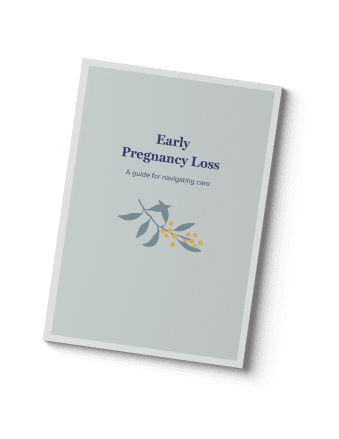
Foreword
Whether you’ve experienced a pregnancy loss or are facing uncertainty, you’re not alone. This guide was created with care to support you during
this time.
Pregnancy loss can bring a wide range of emotions, questions, and decisions. Every experience is unique, and not every part of this guide may feel right for you — but we hope some parts offer comfort and support as you navigate your care with your healthcare team.
Things may feel overwhelming, unfamiliar, or heavy right now. We hope this guide offers moments of clarity, connection, and reassurance as you move through this in your own way, at your own pace.
Who this guide is for
This guide supports individuals affected by pregnancy loss within the first 20 weeks, including:
- All types of miscarriage
- Ectopic pregnancy
- Molar pregnancy
- Caesarean scar pregnancy
- Anembryonic pregnancy
- Termination of pregnancy
About this guide
This guide is for parents navigating pregnancy loss before 20 weeks gestation. It was developed collaboratively by parents with lived experience, healthcare professionals, researchers, and support organisations.
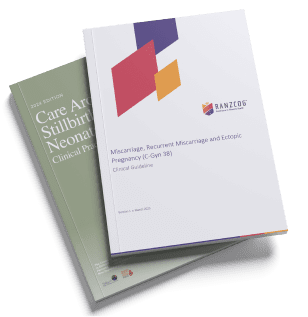
It brings together information from Australia’s first national guideline for miscarriage, recurrent miscarriage, and ectopic pregnancy, published by the Royal Australian and New Zealand College of Obstetricians and Gynaecologists (RANZCOG) in 2025. It also draws on state and territory guidelines, as well as best practice recommendations from Chapter 3: Perinatal Loss Care of the Care Around Stillbirth and Neonatal Death Clinical Practice Guideline (CASaND Guideline, 2024), developed by the Centre of Research Excellence in Stillbirth (Stillbirth CRE) and the Perinatal Society of Australia and New Zealand (PSANZ).
This guide presents this guideline information in a clear and compassionate way — so you can feel more supported, informed, and empowered to make decisions that are right for you and your family during this time.

This guide was developed by the NHMRC Centre of Research Excellence in Stillbirth (Stillbirth CRE), based at Mater Research in Brisbane, Australia in partnership with Pink Elephants Support Network.
We kindly acknowledge the generous support from the Australian Government and the Nine Telethon Mater Little Miracles campaign.



Making this guide work for you
This guide is here to offer clear, compassionate information about what you may be going through, what might happen next, and the care options available to you. It’s not to replace medical advice, but it may help you feel more prepared when talking with your healthcare team.
You can read this guide in whatever way feels right — now or later, all at once, or just the parts you need. Some sections explain what can happen during a miscarriage. While there are no photos, the information may bring up strong emotions. It’s okay to pause, skip, or come back when you’re ready.
You might find it helpful to share parts of this guide with your partner, family, or a friend. It could help them understand what you’re going through and how best to support you.
Throughout the guide, you’ll find quotes from other parents. We hope their words help you feel less alone.
If things feel heavy, take your time. This guide is here to support you in whatever way feels right for you.
Publication date: June 2025
Version: 1.0
Next review due: June 2028
© 2025 NHMRC Centre of Research Excellence in Stillbirth (Stillbirth CRE), Mater Research Institute-University of Queensland
This work is licensed under a Creative Commons Attribution–NonCommercial–NoDerivatives 4.0 International Licence (CC BY-NC-ND 4.0).